
Sattur Sev: How a Gujarati Snack Became Tamil Nadu's Favorite Spicy Kara Sev

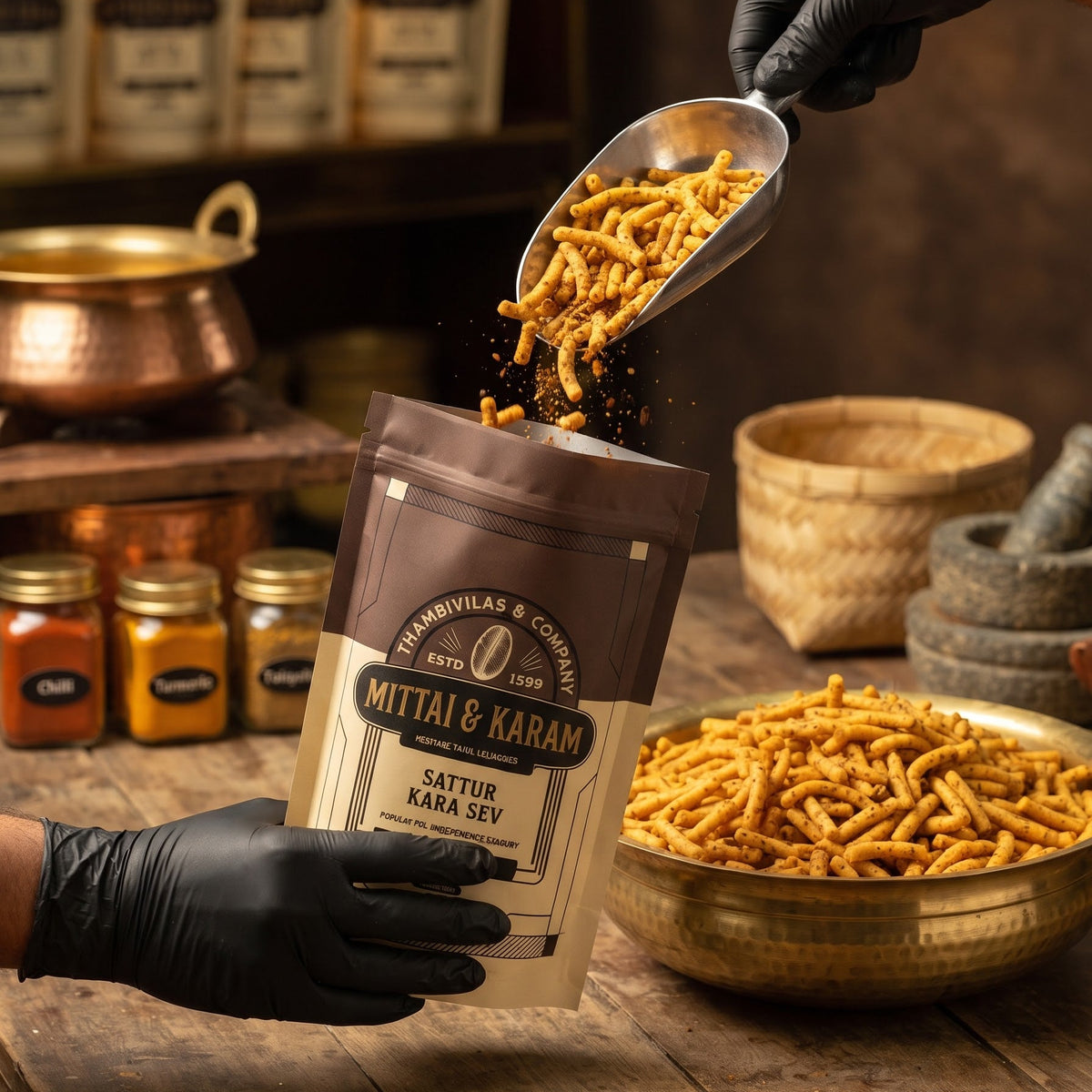
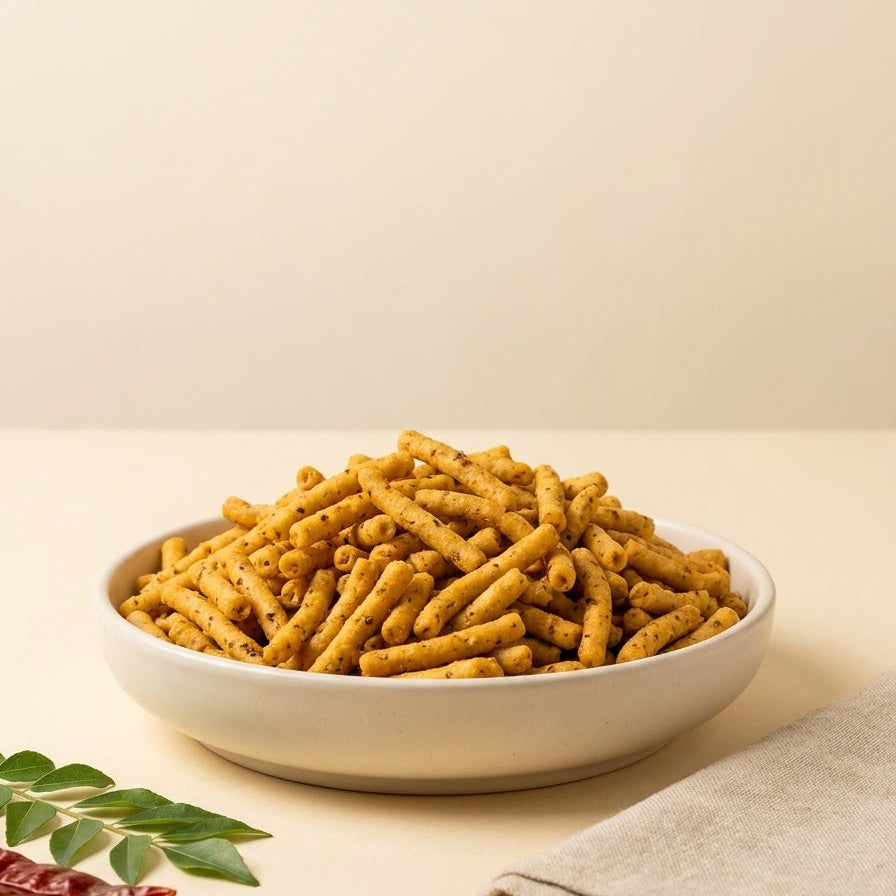
Sattur Kara Sev is a fiery, crunchy South Indian snack with more than a century of history rooted in the town of Sattur, Tamil Nadu. Originally inspired by the milder Gujarati sev, the recipe was transformed using local red chillies and aromatic mountain garlic to create a distinctly South Indian flavour. Made with gram flour, rice flour, garlic, cumin, chilli and traditional frying techniques, Sattur Sev has grown from a local favourite into one of Tamil Nadu’s most recognisable savoury snacks. This blog explores its fascinating origin, traditional preparation, connection to Sattur, and why generations of people continue to treasure it as a nostalgic taste of home.
Sattur Kara Sev is a spicy, crunchy chickpea-flour snack from Sattur, a small town in Tamil Nadu's Virudhunagar district, created in the early 1900s when a local shopkeeper adapted the mild Gujarati sev by adding fiery Sattur red chilies and mountain garlic from the Western Ghats. Over a century later, it remains a point of regional pride and one of the most recognized names in South Indian savory snacks.
The Origin Story
Kara Sev has an unusually well-documented origin for a regional snack. According to the current owners of the original shop, the story starts with M. S. Shunmuga Nadar, a food enthusiast from Sattur who, in the early 1900s, noticed the potential in sev — a besan (gram flour) based snack that originated in Gujarat and was traditionally mild and salty.
Recognizing that plain Gujarati sev wouldn't suit South Indian taste preferences, Shunmuga Nadar reworked the recipe with two local ingredients: red chilies grown in the Sattur region, and mountain garlic sourced from the Western Ghats. The result was spicier, more pungent, and distinctly regional — and it became an instant local hit.
In 1914, he formalized the business by opening Mittai Kadai in Sattur, the shop that put the snack on the map. "Kara" itself means spicy or heat in Tamil, which is reflected directly in the snack's name.
A Family Business, Four Generations Deep
What makes Sattur Sev's history unusually well-preserved is that the original shop — now often referred to as Shanmuga Nadar Mittai Kadai — has stayed in the same family for four generations. Food writers who've visited the shop describe meeting descendants of the founder who still run daily operations using the same traditional preparation methods.
The shop also carries a notable historical footnote: K. Kamaraj, the former Chief Minister of Tamil Nadu who was born in nearby Virudhunagar, was reportedly a regular customer, giving the shop and the snack a degree of local political-cultural cachet beyond just food history.
How Sattur Sev Is Made
The base dough combines besan (gram flour) with rice flour, along with a ground paste of garlic, cumin seeds, and red chili powder, mixed with salt and water into a soft dough similar in consistency to murukku dough. The dough is pressed through a murukku mold directly into hot oil in long strands or circles, fried until golden on both sides, and then broken into pieces once cooled and drained. Some producers add extra pepper for a hotter variant, sometimes marketed separately as "milagu sevu."
Why Sattur Specifically
Sattur's version of sev stands apart from generic sev sold elsewhere in India largely because of three regional inputs: the specific red chili variety grown around Sattur, the mountain garlic from the nearby Western Ghats, and — as some producers note — the historical use of matchbox industry offcuts as fuel for a stable, low-heat flame during frying, a detail tied to Sattur's other well-known local industry (match manufacturing).
Over time, other snack shops in the region adopted similar recipes, and "Sattur" became a geographic shorthand for this style of kara sev the way "Kovilpatti" became shorthand for peanut candy — a name that signals a specific taste profile and preparation tradition, not just a place of manufacture.
A Snack Tied to Homesickness
Producers and food writers covering the snack consistently mention Tamil expatriates as a core customer base — people who specifically stock up on Sattur Sev during visits home to carry back with them, treating it as a taste of home rather than just a spicy snack.