
Thoothukudi Macroon: The Story Behind Tamil Nadu’s Cashew Macaroon

Thoothukudi Macroon, also known as Tuticorin Macaroon, is a distinctive cashew-based sweet with deep roots in Tamil Nadu’s coastal food heritage. Inspired by European almond macaroons introduced through Portuguese trade, local bakers adapted the recipe using cashews, creating the iconic cone-shaped delicacy known today. Made with cashews, egg whites, and sugar, the macroons are carefully folded, piped, and slow-baked to achieve their signature crisp exterior and light, airy, melt-in-the-mouth texture. This blog explores the fascinating origins, traditional preparation, unique characteristics, and enduring connection of the beloved Thoothukudi Macroon to its hometown.
The Thoothukudi macaroon (also called Tuticorin macaroon) is a cone-shaped cashew meringue sweet from the port town of Thoothukudi, Tamil Nadu — a local reinvention of the European almond macaroon brought by Portuguese traders. It's made by folding coarse and fine cashew powder into whipped egg whites and sugar, then slow-baking the mixture for hours to produce a light, airy, melt-in-the-mouth texture.
What Is a Thoothukudi Macroon?
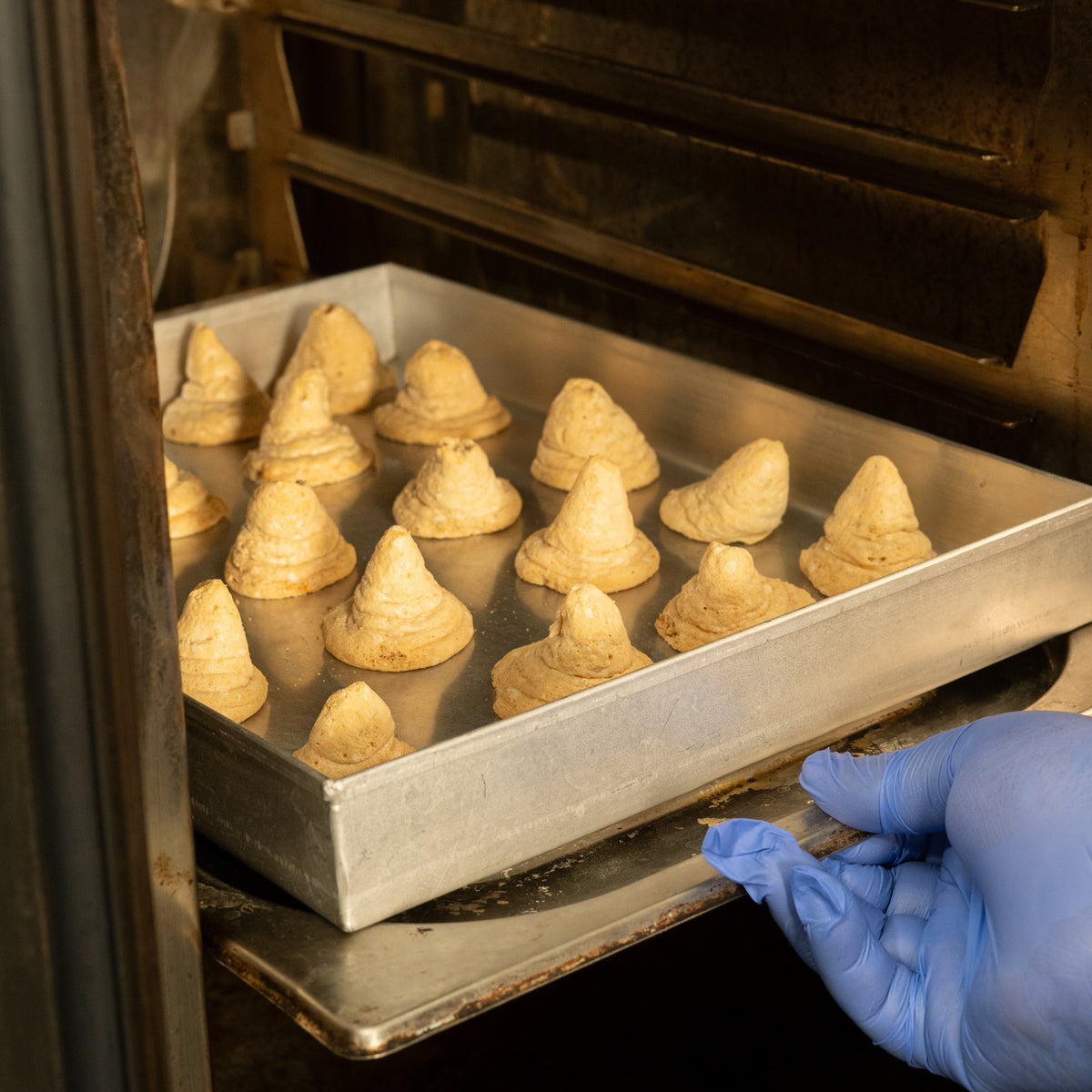
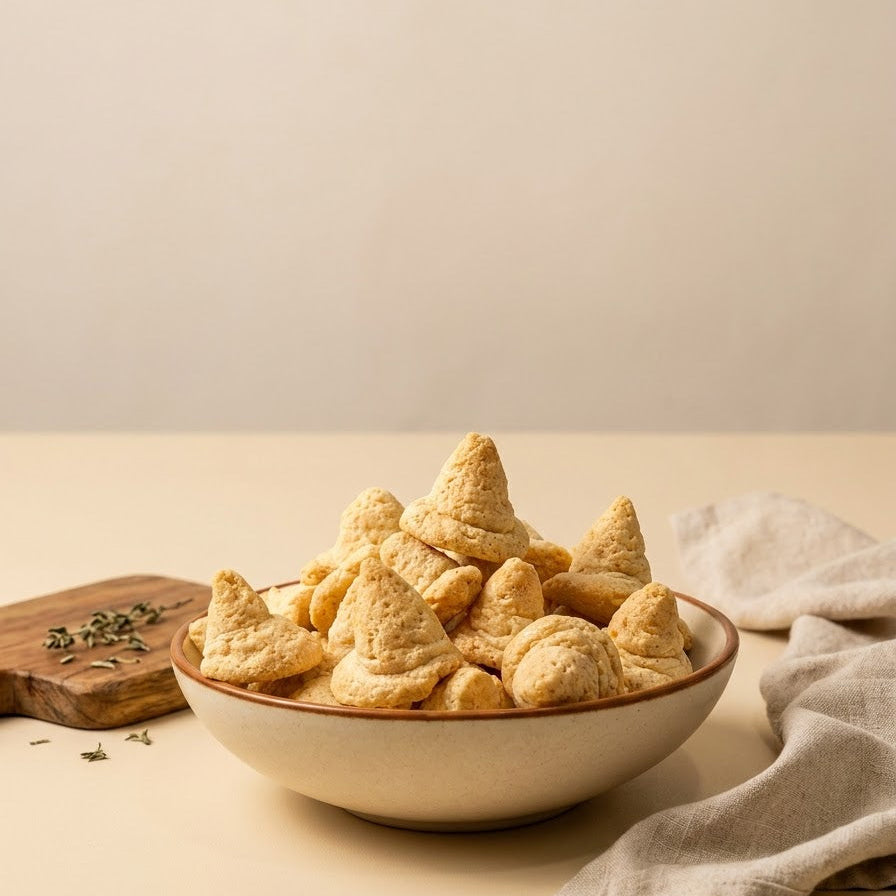
Despite the name, a Thoothukudi macroon has almost nothing in common with the coconut macaroons or French macarons most people picture. It's a spiral, cone-shaped confection made from cashew nuts, sugar, and egg whites — closer in spirit to a meringue than a biscuit. The shape is often compared to a small modak, tapering to a point at the top.
Where the Name Comes From
Thoothukudi was formerly known as Tuticorin, and both names are still used interchangeably for the sweet — you'll see it sold as "Tuticorin macaroon" in most bakeries and online stores even though the city officially reverted to Thoothukudi. It's a port city on the Coromandel Coast of the Bay of Bengal, in the Thoothukudi district of Tamil Nadu, and has historically been a hub for pearl fishing, salt production, and maritime trade.
The Portuguese Connection
The origin story is genuinely colonial-era food history, not marketing folklore. Classic European macaroons are made with ground almonds, sugar, and egg whites. According to the Wikipedia entry on the dish, the macaroon reached India via the Portuguese, travelling through Ceylon (present-day Sri Lanka) before arriving in Thoothukudi.
Almonds weren't a practical ingredient for a South Indian coastal town — they had to be imported and were expensive. Cashews, on the other hand, were abundant along the Tamil Nadu coast, so bakers substituted them for almonds, creating a distinctly local version of a European sweet.
How It's Traditionally Made
The process is more involved than most Indian sweets, which is part of why it has stayed a specialty item rather than a mass-market snack:
-
Grinding the cashews — done in two separate batches, producing one coarse and one fine cashew powder. Using both textures together is what gives the finished macroon its particular bite and mouthfeel.
-
Making the meringue — egg whites are whisked with sugar into a stiff meringue.
-
Folding, not stirring — the cashew powders are gently folded into the egg-white mixture by hand, a technique that traps air and gives the macroon its signature light, airy structure.
-
Piping — the mixture is piped into cones, giving the macroon its recognizable spiral shape.
-
Slow baking — traditionally baked for around six hours at a low temperature (roughly 152°C), which is what produces the crisp exterior and delicate, almost-hollow interior.
Several bakeries in Thoothukudi still make macaroons using this same century-old method passed down through generations.
Why the Texture Is So Distinctive
If you've never had one, the closest comparison is a French meringue with a nutty, cashew-forward flavor — crisp on the outside, light and slightly chewy in the center. The two-texture cashew powder (coarse plus fine) is the technical detail most home recipes skip, and it's a large part of why bakery-made versions taste noticeably different from home attempts.
A Regional Sweet With City Pride
Thoothukudi macroons are specifically associated with their city of origin the way Belgian chocolate or Swiss cheese carry a geographic identity — Tamil Nadu food writers and home cooks alike treat "genuine Tuticorin macaroon" as something you either get from Thoothukudi bakeries directly, or from someone continuing that specific recipe tradition elsewhere.
Where to Order Authentic Thoothukudi Macroon Online
If you're outside Tamil Nadu — or simply want the macaroon delivered without a trip to Thoothukudi — Thambivilas makes small batches of Tuticorin Cashew Macaroon using the traditional preparation method, roasted and shipped pan-India.