
Kovilpatti Kadala Mittai: Tamil Nadu’s Famous Peanut Candy

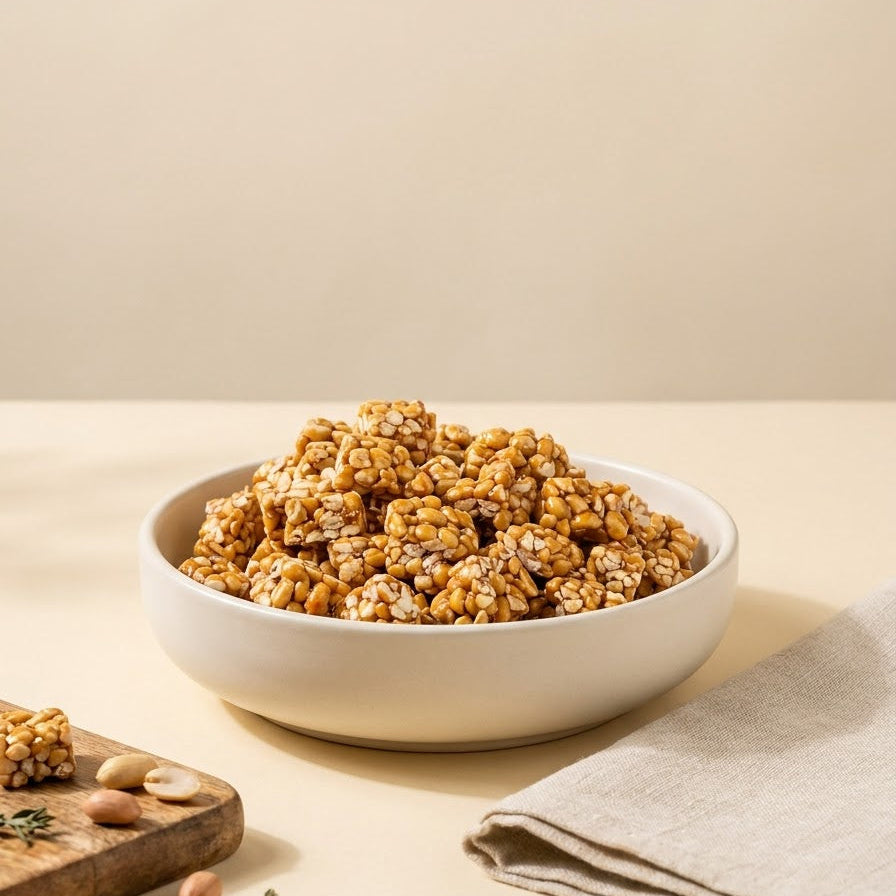
Kadala Mittai, also known as Kadalai Mittai, is a traditional South Indian peanut candy made by combining roasted peanuts with perfectly cooked jaggery syrup. Deeply associated with Kovilpatti in Tamil Nadu, this simple yet distinctive sweet has become an important part of the region’s culinary heritage and has earned a Geographical Indication (GI) tag. From achieving the perfect jaggery consistency to its traditional coconut garnish, this blog explores the making, history, regional significance, and enduring popularity of Kovilpatti Kadala Mittai.
Kadala mittai (also spelled kadalai mittai or kadalai urundai) is a South Indian peanut candy made from roasted peanuts bound together with jaggery syrup, most famously produced in Kovilpatti, Tamil Nadu. The name itself is regional — the same sweet is called kadala mittai in Kerala, kadalai mittai in Tamil Nadu, kadale mittai in Karnataka, and palli patti in Andhra Pradesh and Telangana, all falling under the broader Indian sweet category known as chikki.
What Is Kadala Mittai, Exactly
At its simplest, kadala mittai is peanuts and jaggery — that's it, in the most traditional versions. Roasted peanuts are folded into hot jaggery syrup cooked to precisely the right stage, then shaped into either round balls (kadalai urundai) or flat rectangular bars, depending on region and producer. According to Wikipedia's entry on chikki, this exact preparation goes by different regional names across South India, all describing essentially the same peanut-jaggery brittle.
Getting the Jaggery Stage Right
Home cooks who've documented the process in detail consistently flag one specific technical challenge: the jaggery syrup has to reach precisely the hard-ball stage — roughly 130°C — before the peanuts go in. Too soft, and the mittai turns out chewy and sticky rather than crisp; too hard past the soft-crack stage, and it becomes difficult to bite. Some home cooks recommend using a candy thermometer for consistency, since judging the stage by eye (the traditional method, dropping syrup into cold water to test if it forms a hard ball) takes real practice.
Why Kovilpatti's Version Is Considered the Standard
Kovilpatti, a town in Tamil Nadu's Thoothukudi district, has become so strongly associated with this sweet that "Kovilpatti Kadalai Mittai" functions almost as a specific product name rather than just a place-plus-food label. According to a home cook referencing a feature in The Hindu newspaper on the topic, Kovilpatti's specialty reportedly comes down to a combination of the local water, the specific peanut variety used, and — notably — three different types of jaggery used in combination, each contributing a different flavor note.
The dish has become significant enough regionally to earn a Geographical Indication (GI) tag, formally protecting the name and tying it to production methods specific to the Kovilpatti region.
A Traditional Coconut Garnish
One recurring detail across recipe writers and sellers: authentic kadala mittai is traditionally topped with dried, colored coconut shreds — commonly in pink, green, or natural white — sprinkled over the surface before it fully sets. Several home cooks specifically note that buying kadala mittai with this coconut topping is considered a mark of a properly made, flavorful batch.
A Festival and Everyday Snack
Kadala mittai shows up both as a specific festival food — associated particularly with Karthigai Deepam in Tamil Nadu — and as a simple, protein-rich everyday snack that mothers in Tamil households have long encouraged children to eat regularly, according to several home cook and recipe writers who describe it as a snack their own mothers pushed them toward for its nutritional value.
Order Authentic Kadala Mittai Online
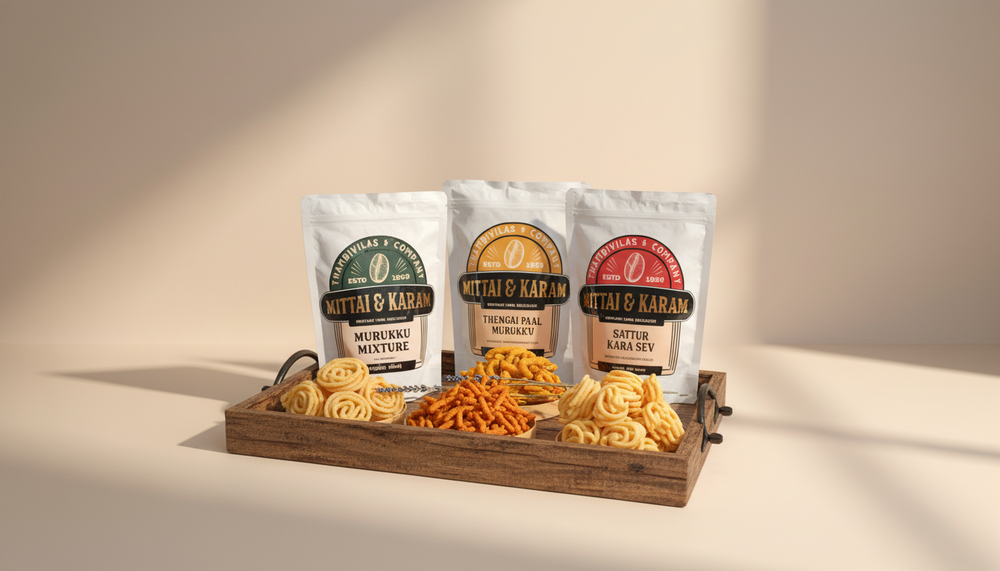
Thambivilas prepares Kovilpatti Kadala Mittai using the traditional peanut-and-jaggery method, in small batches.