
Murukku Mixture: What "Mixture" Actually Means in South Indian Snacking

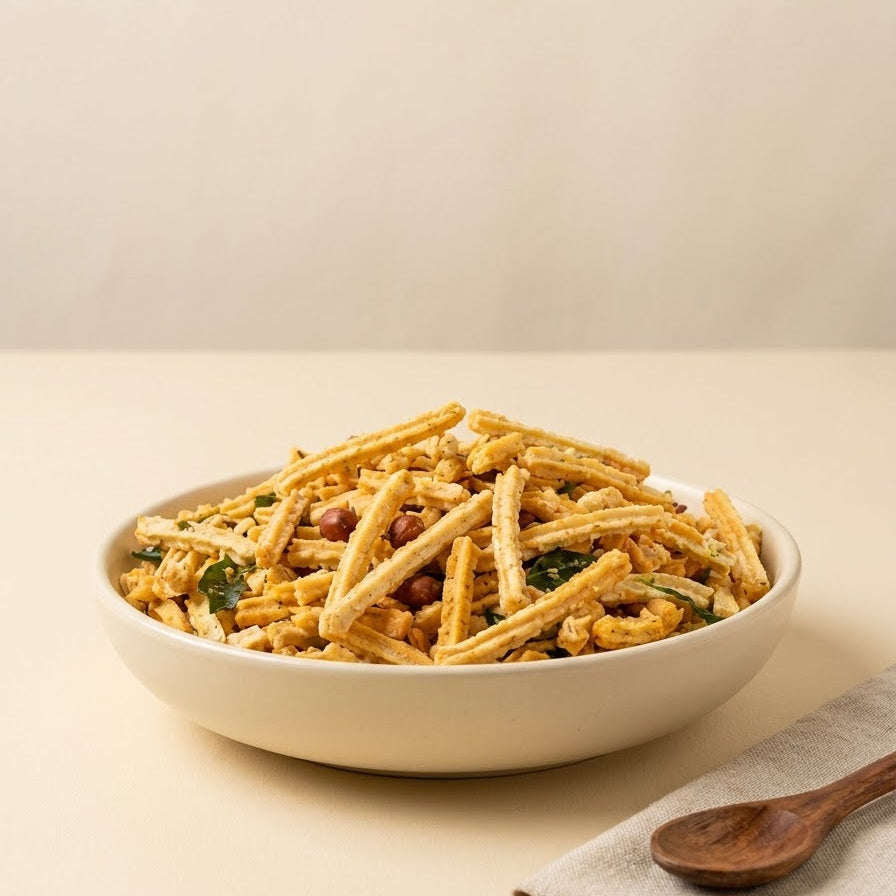
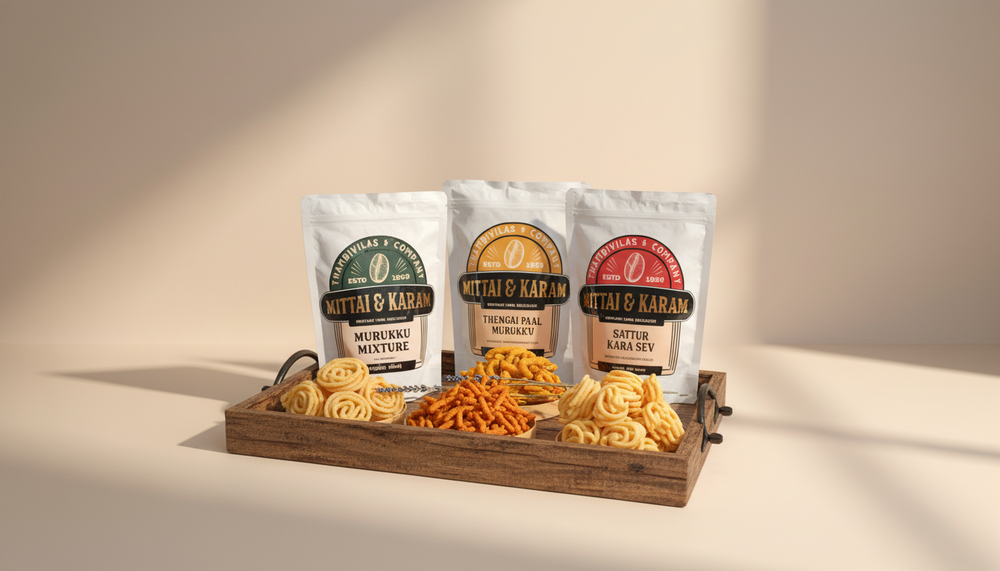
Murukku Mixture is a classic South Indian savoury snack known for its irresistible combination of crunch, spice, and contrasting textures. Also associated with the traditional Madras Mixture, it brings together favourites such as kara boondi, omapodi, peanuts, roasted lentils, curry leaves, spices, and crunchy pieces of murukku. A familiar tea-time snack and an important part of Diwali celebrations across South India, mixture has been prepared in large batches and shared with family, neighbours, and friends for generations. This blog explores what goes into an authentic Murukku Mixture, how it differs from chivda and farsan, its connection to Madras Mixture, and its enduring place in South Indian snacking traditions.
Murukku Mixture — often just called "Mixture" or "Madras Mixture" in South India — is a blended savory snack combining kara boondi, omapodi (thin gram-flour noodles), fried peanuts, curry leaves, and roasted lentils, tossed together with chili powder and spices. It's South India's answer to what's called chivda in North and West India, and while murukku itself isn't always the primary ingredient, broken murukku pieces are a common addition in many home and regional versions.
What's Actually in "Mixture"
Despite the name suggesting murukku is the star ingredient, traditional South Indian Mixture is built primarily around two components: omapodi (thin, fried gram-flour and rice-flour noodles, essentially plain sev) and kara boondi (small, spiced, deep-fried gram-flour droplets). Recipe writers documenting the traditional preparation consistently identify these two as the core building blocks, with everything else — peanuts, roasted chana dal, cashews, fried curry leaves, poha (flattened rice) — added around them.
The name "Mixture" is fairly literal: it's a mix of separately fried components, tossed together at the end with salt, turmeric, asafoetida, and red chili powder rather than cooked together as one item.
Mixture vs. Chivda vs. Farsan
What's called "Mixture" in Tamil Nadu and South India is functionally the same category of snack that goes by chivda in Maharashtra and parts of North India, and is sometimes grouped under the broader term farsan. Recipe writers researching the dish note this regional naming difference directly — it's the same basic concept (a blended, spiced snack mix meant for tea-time and festivals) with different regional builds and names.
Regional Name: Madras Mixture
Because the most well-documented and widely referenced version of this snack comes from Chennai (formerly Madras), it's frequently called "Madras Mixture" in recipe writing and packaging, distinguishing it from other regional mixture variants like Kerala Mixture, which tends to use a slightly different ratio of ingredients and sometimes different spicing.
Why It's a Diwali Staple
Mixture is specifically and repeatedly described by home cooks as central to Diwali preparation in South Indian households — made in large batches alongside murukku and laddoos in the days before the festival, then eaten for weeks afterward, including as an accompaniment to regular meals, not just as a standalone snack. One recipe writer specifically recalls her mother making mixture in bulk and the family eating it with meals for two weeks straight after Diwali.
Its convenience for gifting and distribution is also frequently noted — a relatively small quantity of mixture, once blended with all its components, yields a satisfying volume, making it practical for sharing with neighbors and relatives during festival season.
Where Murukku Fits Into "Murukku Mixture" Specifically
While the classic Madras Mixture formula centers on omapodi and boondi rather than murukku, many home and regional variations do add broken pieces of murukku directly into the mix, along with other optional additions like fried coconut, corn flakes, or green peas — which is where the "murukku mixture" naming comes from specifically. The core idea across every version stays the same: a crunchy, textured combination of separately fried South Indian snack elements, unified by a shared spice coating.