
Thenga Paal Murukku: The Coconut Milk Murukku of Tamil Nadu Festivals

Thenga Paal Murukku, also known as Thengai Paal Murukku, is a traditional Tamil Nadu savoury distinguished by the use of fresh coconut milk in its rice-flour dough. The coconut milk gives this classic murukku a rich, lightly sweet flavour while preserving the crisp texture that makes murukku a South Indian favourite. Traditionally prepared in large batches for celebrations such as Diwali, Krishna Janmashtami, and Ganesh Chaturthi, it has long been part of Tamil Nadu’s festival cooking and gifting traditions. This blog explores what makes Thenga Paal Murukku unique, its traditional preparation, characteristic smooth shape, and its enduring place in South Indian festive food culture.
Thenga Paal Murukku (also spelled Thengai Paal Murukku) is a South Indian murukku variety made by replacing plain water with fresh coconut milk in the traditional rice-flour dough, giving it a lightly sweet, rich, coconut-forward flavor. It's especially associated with Diwali, Krishna Janmashtami, and Ganesh Chaturthi, when families prepare large batches for festival snacking and gifting.
What Makes This Murukku Different
Murukku — the word literally means "twist" in Tamil — is one of South India's most recognizable snacks, made from rice flour and urad dal flour, shaped using a murukku press, and deep-fried until crisp. There are dozens of regional variations (thenkuzhal, mullu murukku, butter murukku, Manapparai murukku, among others), each defined by a small change in ingredients or shape.
Thenga Paal Murukku's defining feature is the coconut milk used to bind the dough instead of plain water. Traditionally this means fresh coconut is grated, ground with warm water, and squeezed through a strainer to extract thick coconut milk, which is then worked into a mixture of rice flour, urad dal flour, sesame seeds, butter, salt, and a pinch of asafoetida (hing).
Traditional vs. Modern Preparation
Home cooks documenting the traditional method note a few consistent techniques: the rice is often washed, dried, and ground fresh rather than using store-bought flour, and the coconut milk is added gradually rather than all at once to avoid the dough turning too hard once fried — a common complaint when the sugar-to-liquid ratio is off. Some recipes also add moong dal flour alongside the usual urad dal for extra crispness.
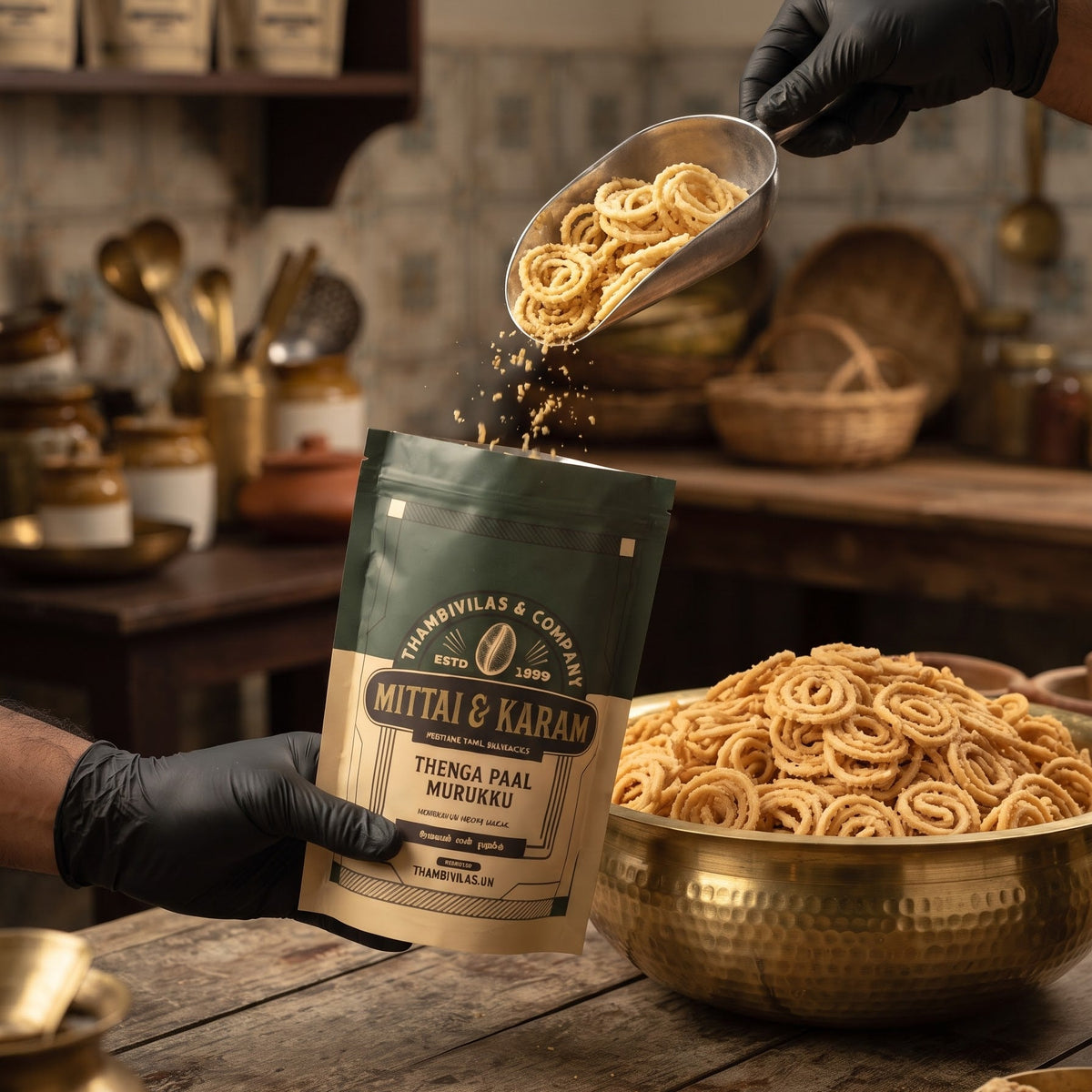
Unlike some murukku varieties that are pressed with a spiked or star-shaped disc, thenga paal murukku is traditionally made without spikes, giving it a smoother, rounder coil.
Why It's a Festival Staple
Coconut milk murukku shows up specifically around three occasions in Tamil Nadu: Diwali (Deepavali), Ganesh Chaturthi, and Krishna Janmashtami. Recipe writers describe it as part of a rotating list of murukku varieties families make in bulk ahead of Diwali specifically, alongside thenkuzhal and butter murukku, to be stored in airtight containers and shared with neighbors and relatives — a practice that's as much about the ritual of festival cooking as the snack itself.
Several well-known Tamil Nadu sweet shops (Annapoorna among them) have specific versions of this murukku that home cooks reference as the benchmark for taste when trying to replicate the recipe at home.