
Thean Mittai: The Nostalgic Petti Kadai Sweet of Tamil Nadu

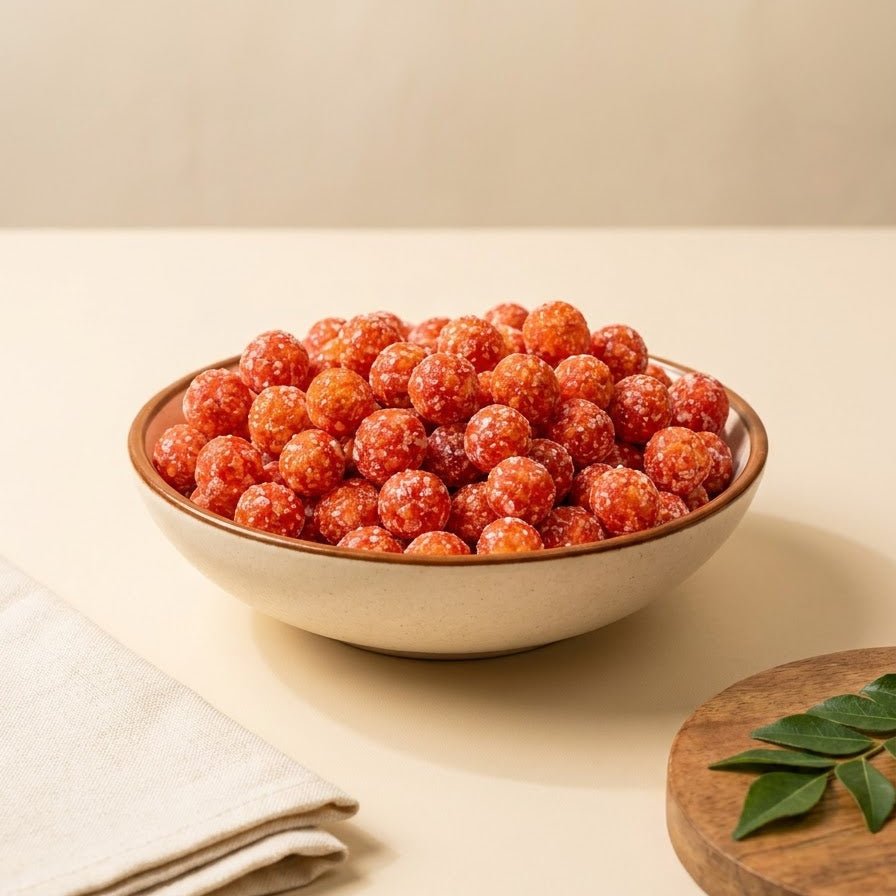
Thean Mittai, also known as Thaen Mittai or Honey Candy, is a nostalgic South Indian sweet that brings back memories of Tamil Nadu’s old petti kadai shops. Recognisable by its bright orange colour and syrup-filled centre, this traditional sweet is made by frying small balls of rice-and-urad-dal batter and soaking them in sugar syrup. Once a favourite after-school treat sold from glass jars in small neighbourhood shops, Thean Mittai gradually became harder to find with the rise of supermarkets and organised retail. This blog explores its traditional preparation, unique syrupy texture, childhood nostalgia, regional names, near disappearance, and the revival that is helping preserve this beloved Tamil sweet for a new generation.
Thean Mittai (also called thaen mittai or "honey candy") is a bright orange South Indian sweet made from a fried rice-and-urad-dal batter soaked in sugar syrup, traditionally sold from small village shops called petti kadais. Once a common sight in glass jars across Tamil Nadu and Kerala through the 1990s, it nearly disappeared with the rise of supermarkets before being revived by home cooks and small self-help-group producers.
What Is Thean Mittai?
"Thaen" means honey in Tamil and Malayalam, but there's no actual honey involved — the name comes from the sugar syrup that oozes out the moment you bite into the candy, mimicking honey's texture and sweetness. It's a small, round, deep-fried ball with a thin outer shell, filled with a warm, syrupy center that releases as soon as you bite in.
The traditional batter is made from a fermented rice and urad dal mixture (similar to idli/dosa batter), or in commercial versions, maida (refined flour), yogurt, and baking soda. The dough is dropped into hot oil as small balls, fried until golden, then immediately soaked in hot sugar syrup — the syrup gets trapped inside the fried shell as it cools, creating the "burst in your mouth" effect the sweet is known for.
A Childhood Sweet, Literally
What sets thean mittai apart from most sweets is how tightly it's bound to a specific generation's memory of growing up in Tamil Nadu and Kerala. Home cooks and food bloggers writing about it consistently describe the same scene: running to the local petti kadai (a small roadside or village shop) right after school, buying one or two pieces with whatever pocket money was on hand, and watching the syrup ooze out on the first bite.
It was sold loose from glass jars in these small shops — not packaged, not branded, just scooped out and handed over. That informal, hyper-local distribution is part of why it became so associated with a specific kind of childhood nostalgia rather than being a "festival sweet" tied to Diwali or weddings.
Why It Nearly Disappeared
As supermarkets and organized retail spread through Tamil Nadu and Kerala from the 2000s onward, the small petti kadai shops that were thean mittai's primary distribution channel gradually closed or lost business. The sweet became genuinely hard to find for a period — food writers describe searching for it in vain, or finding versions that "never taste the same" as the original.
Its comeback has been driven in large part by women's self-help groups producing traditional snacks and sweets for local markets, alongside a wave of home cooks and recipe bloggers documenting the traditional method so it isn't lost. For Tamil and Malayali communities living abroad, it's frequently mentioned as one of the sweets people miss most and can't easily find outside India.
Regional Names
The sweet goes by several names depending on region: thaen mittai, thenaaru, thaen unda, and thennilavu are all used, particularly in Kerala. In Tamil Nadu it's most commonly just "thean mittai" or "honey candy" in English-language listings.