
South Indian Snacks: A Complete Guide to Tamil Nadu's Savory Food Heritage

South Indian snacks are a diverse part of the region’s culinary heritage, shaped by ingredients such as rice flour, lentils, coconut, curry leaves, mustard seeds, and asafoetida. From crunchy classics like murukku, mixture, and sev to freshly prepared street favourites such as bajji, bonda, and vada, these snacks reflect centuries of regional cooking traditions. Many began as practical, shelf-stable foods suited for long journeys before becoming festival staples, tea-time favourites, and cherished gifts. This blog explores the history, defining ingredients, major categories, regional specialities, and cultural significance of South Indian snacks, with a special focus on Tamil Nadu’s rich savoury food traditions.
South Indian snacks are a category of savory, often deep-fried foods built primarily on rice flour, lentil flour, and coconut, distinguished from North Indian snacks by their use of curry leaves, mustard seeds, and asafoetida rather than wheat-based dough. The tradition spans centuries — food historian K. T. Achaya traced snacks like murukku back to practices of preserving food for long journeys, and the category today ranges from festival staples like murukku and thattai to city street food like bajji and bonda.
Primary keyword focus: this article is optimized around "South Indian snacks," with supporting coverage of murukku, mixture, and kadalai mittai as core examples within the category.
What Defines a South Indian Snack
Traditional Indian snacks vary sharply by region, and South India's version has a distinct signature: rice flour and lentils form the base of most items, rather than the wheat flour common in North Indian snacks like samosas and fafda. Curry leaves, mustard seeds, and asafoetida (hing) are the defining spice notes, and coconut — fresh, dried, or as milk — appears far more often than in northern snack traditions.
Peanuts, cashews, and sesame seeds are frequently folded into savory mixes for texture and nutrition, and while chili powder and black pepper do show up, South Indian snacks lean toward aromatic and crunchy rather than uniformly fiery.
A Food History Older Than It Looks
The idea that South Indian snacks are a purely modern invention doesn't hold up. Food historian K. T. Achaya, in his seminal book The Story of Our Food, specifically notes that murukku and boondi were carried on long journeys because rice and chapati would spoil within a day or two — meaning fried, dry snacks served a genuinely practical preservation purpose long before they became festival food.
Separately, vadams and sandige (sun-dried, deep-fried rice crispies) are believed to have evolved from the same preservation techniques used for pickling, dating back to the Sangam period (3rd century BCE to 3rd century CE) — a time when salt from South India's coastline was already being used to preserve meat and fish, according to food writer Vidya Balachander's research into the region's fermented and dried snack traditions.
The Core Categories
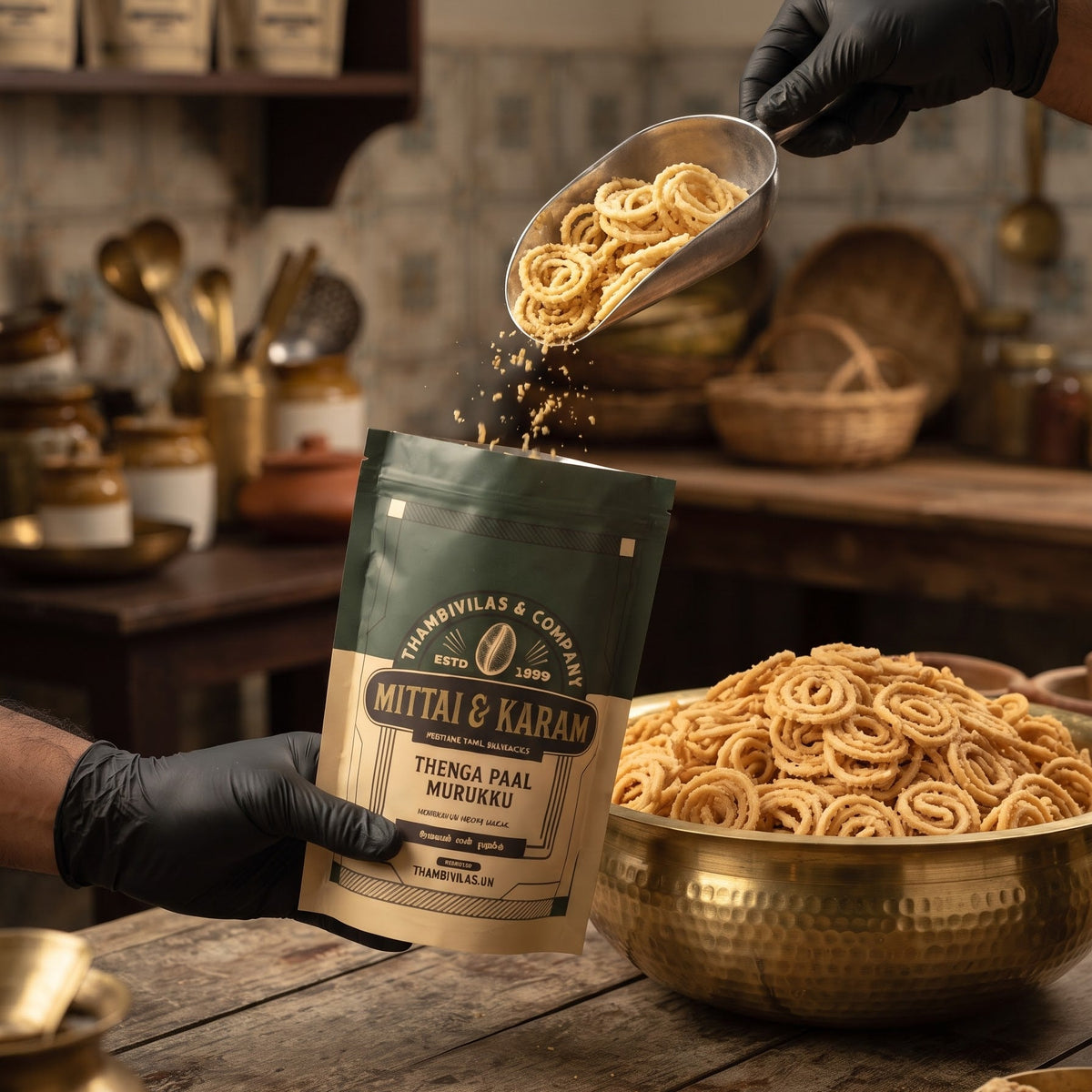
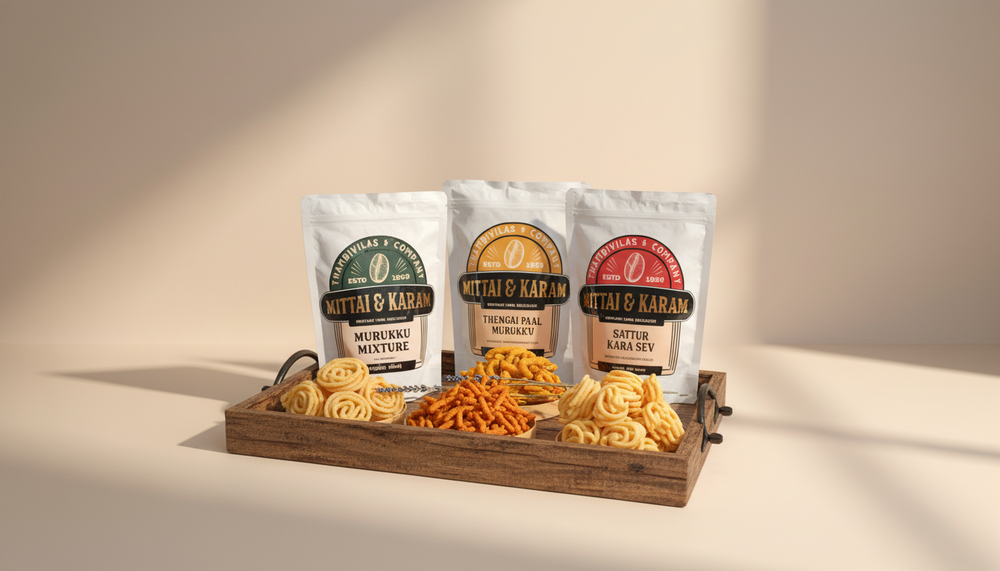
Murukku and its variants — Murukku (meaning "twist" in Tamil) is arguably the most iconic South Indian snack, made from rice and urad dal flour, shaped with a press, and deep-fried into spirals. Regional sub-varieties include thenkuzhal (thin, needle-style), Manapparai murukku (a Geographical Indication-tagged variety from a specific Tamil Nadu town), and thengai paal murukku (made with coconut milk).
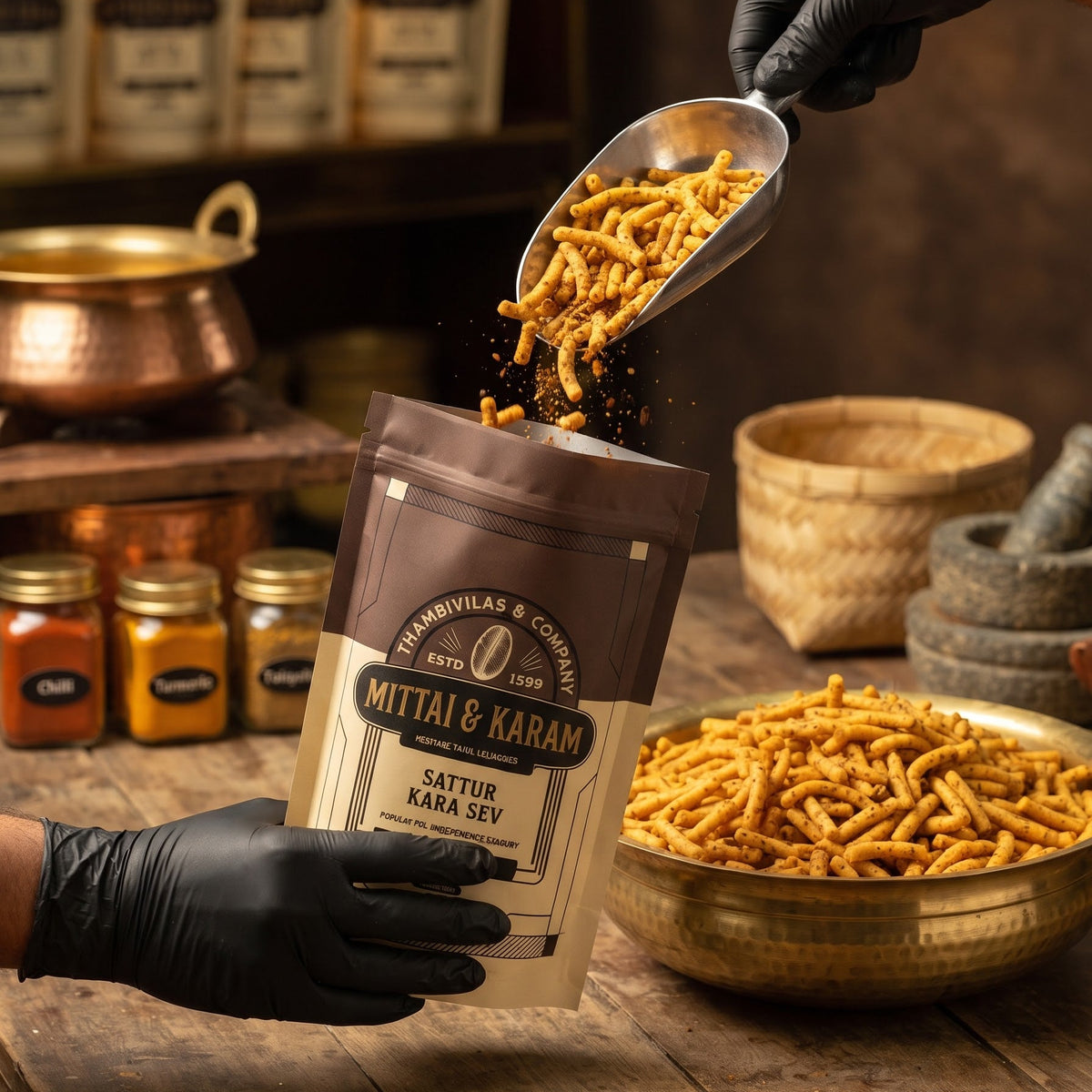
Sev and mixture — Savory chickpea-flour strands and blended snack mixes, with Sattur in Tamil Nadu being the most famous name associated with a spicy sev variant.
Kadalai mittai and chikki-style snacks — Technically sweet, but often grouped with the broader savory snack tradition since they're sold and gifted alongside karam items — peanuts bound in jaggery syrup, most famously from Kovilpatti.
Street snacks — Bajji, bonda, vada, and similar fried items that are eaten fresh rather than packaged, more common as city street food than shelf-stable gifting items.
Why These Snacks Travel Well (Literally and Culturally)
Unlike fresh street food, packaged South Indian snacks like murukku, mixture, and mittai are shelf-stable, which is part of why they've become the default gifting and homesickness item for Tamil communities living outside South India. This is a recurring theme across food writing on the subject — these snacks aren't just eaten, they're specifically associated with sending a taste of home to family abroad, or stocking up during a visit back.