
Peanut Chikki: The Railway-Born Snack That Became India's Winter Staple

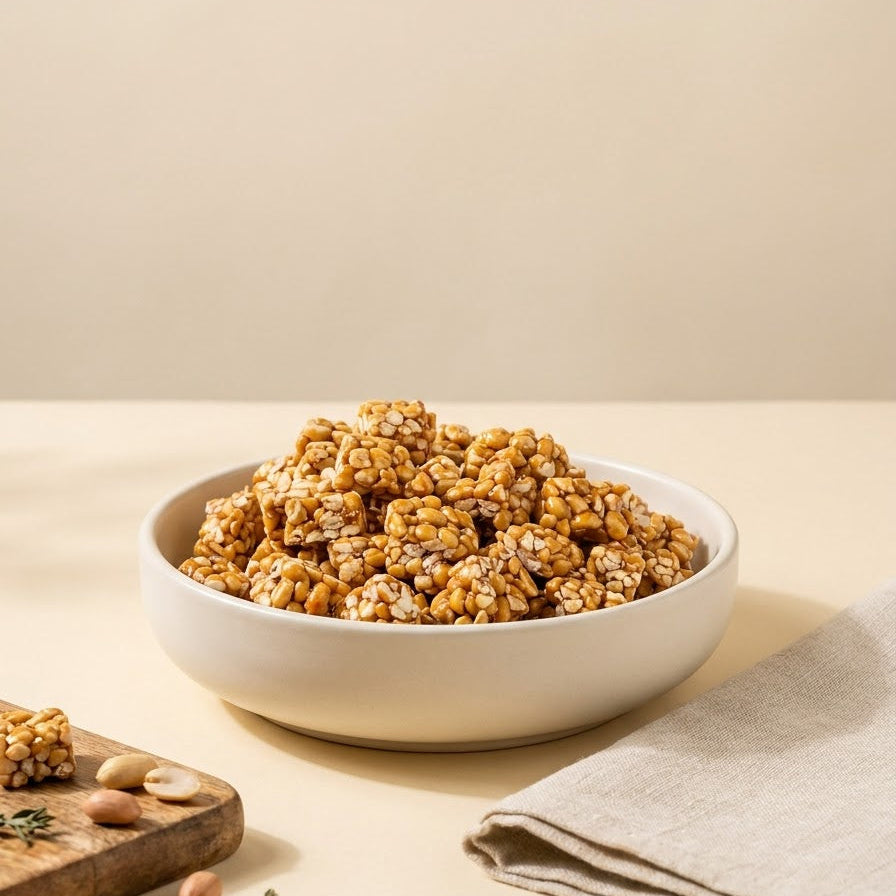
Peanut Chikki is one of India’s most recognisable traditional snacks, made by combining roasted peanuts with rich jaggery syrup to create a crisp, nutty brittle. Its fascinating history traces back to late 19th-century Lonavala, where a compact peanut-and-jaggery snack was created for railway workers before becoming popular with train passengers and eventually developing into the famous Lonavala Chikki. Today, Peanut Chikki is enjoyed across India, particularly during winter and harvest festivals such as Makar Sankranti. This blog explores its railway origins, the meaning behind the name “Chikki,” its difference from Western peanut brittle, and the many regional versions found across India.
Peanut chikki is India's peanut-and-jaggery brittle, with a documented origin story tracing back to Maganlal Agarwal, a sweet-shop owner in Lonavala, Maharashtra, who created "gud dani" for railway workers building the Bombay-Pune line in the late 19th century. The snack was later commissioned by Indian Railways for train passengers, spawned the now-famous "Lonavala Chikki" brand name, and remains one of India's most recognized winter and festival snacks.
The Railway Origin Story
Unlike many traditional Indian sweets whose origins are lost to folklore, peanut chikki has an unusually specific, documented starting point. According to multiple food-history sources, the concept dates to between 1882 and 1888, during the construction of the railway line through the Western Ghats between Bombay and Lonavala — hard, difficult labor that created demand for compact, high-energy food for the workers.
Maganlal Agarwal, a local sweet-shop owner, created a high-calorie mix of jaggery, peanuts, and ghee, calling it "gud dani," and began distributing it to rail workers. Once the railway was complete and passenger service began, railway authorities recognized its commercial appeal and commissioned Agarwal to produce it for travelers as well — at which point he renamed it Maganlal Chikki, which eventually became known simply as Lonavala Chikki, according to its Wikipedia entry.
Where the Word "Chikki" Comes From
The name itself has a specific linguistic origin: chikki derives from the Marathi word chikkat, meaning "sticky" — a direct, literal description of the confection's texture during preparation, according to food-industry writing on the snack's history.
How Peanut Chikki Differs From Western Brittle
The Oxford Companion to Sugar and Sweets notes that brittle-type candies made from nuts and boiled sugar are widespread globally and likely ancient, given how widely available the core ingredients are — but chikki has one specific, defining difference from Western peanut brittle: it uses jaggery rather than refined sugar. Where Western brittle uses plain peanuts and dissolved white sugar, chikki uses jaggery's earthy molasses notes boiled into a syrup, which is then combined quickly with roasted peanuts and rolled flat between greaseproof paper.
A Snack Tied to Winter and Harvest Festivals
Chikki has a strong seasonal identity in India, closely associated with winter and specifically with Makar Sankranti, the harvest festival celebrated across much of the country. In states like Gujarat and Maharashtra, exchanging chikki during Sankranti is treated as a symbolic gesture of sharing sweetness and good health, not just a seasonal snack choice.
Regional Names Across India
While "chikki" is the most widely recognized name nationally, the same peanut-jaggery confection carries different regional names: kadala mittai in Kerala, kadalai mittai in Tamil Nadu, kadale mittai in Karnataka, palli patti in Andhra Pradesh and Telangana, and layyiya patti in parts of Bihar and Uttar Pradesh, according to food-history writing on the snack's regional spread.